
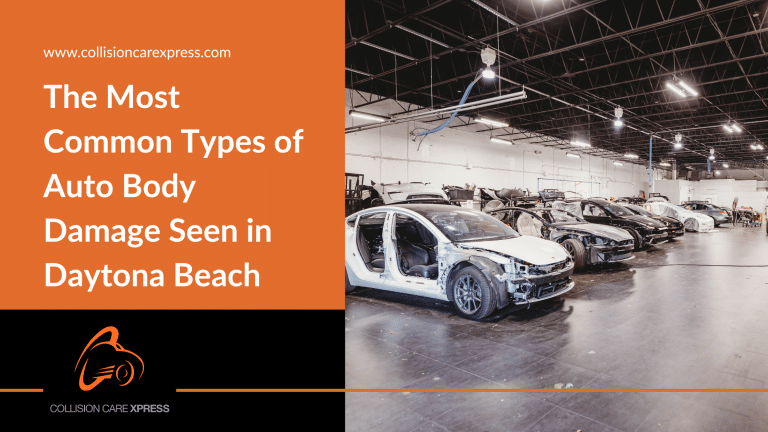
Summary
- Daytona Beach drivers frequently experience bumper damage, dents, scratches, and fender damage
- Parking lot incidents and heavy tourist traffic contribute to many cosmetic collisions
- Coastal weather, storms, and road debris can also damage vehicle paint and body panels
- Modern vehicles often contain sensors and safety systems behind damaged panels
- Some cosmetic damage may hide structural or alignment problems underneath
- OEM repair procedures help guide proper restoration and safety inspections
- Prompt repairs may help prevent corrosion and worsening damage
- Professional inspections help determine whether panels can be repaired or require replacement
Driving in Daytona Beach comes with unique conditions that can increase the likelihood of auto body damage.
Between:
- Heavy tourist traffic
- Busy parking lots
- Coastal weather
- Frequent storms
- Highway driving
- Daily commuting
Local drivers commonly experience a wide range of cosmetic and collision-related damage to their vehicles.
Some damage may appear minor at first, while other situations may involve hidden structural or safety concerns underneath visible dents and scratches.
Modern vehicles are also more complex than many drivers realize. Today’s cars often contain:
- Radar sensors
- Backup cameras
- Parking systems
- Aluminum body panels
- Advanced paint finishes
- Integrated safety technology
Because of this, even small dents or bumper damage may require professional inspections and manufacturer-approved repair procedures.
In this guide, we’ll explain the most common types of auto body damage seen in Daytona Beach, what causes them, and how modern collision repair facilities restore damaged vehicles properly.
Bumper Damage
Bumper damage is one of the most common repair issues seen in Daytona Beach.
This type of damage often results from:
- Parking lot accidents
- Rear-end collisions
- Low-speed impacts
- Road debris
- Tourist traffic congestion
Modern bumpers are designed to absorb impact energy during collisions, but they also frequently contain:
- Parking sensors
- Radar systems
- Collision avoidance technology
- Camera systems
Even minor bumper damage may affect sensor alignment or internal mounting structures.
Professional collision repair services often include structural inspections and calibration evaluations to determine whether bumper damage involves hidden safety concerns.
Fender Damage
Fenders are particularly vulnerable during:
- Side impacts
- Parking lot collisions
- Turning accidents
- Tire blowouts
- Minor roadway incidents
Common fender damage includes:
- Dents
- Scratches
- Paint damage
- Sharp creases
- Panel misalignment
Some fenders can be repaired successfully, while others may require replacement depending on:
- Metal stretching
- Corrosion
- Structural integrity
- Panel alignment
Modern aluminum fenders may also require specialized repair techniques and tools.
Scratches and Paint Damage
Paint scratches are extremely common throughout Daytona Beach because of:
- Parking lot contact
- Road debris
- Sand exposure
- Storm debris
- Shopping carts
- Minor impacts
Florida’s intense sunlight and coastal conditions can worsen paint damage over time if repairs are delayed.
Common paint damage includes:
- Clear coat scratches
- Paint chips
- Surface scuffs
- Deep scratches exposing metal
Drivers researching professional auto body repair services often discover that prompt refinishing helps prevent corrosion and long-term paint deterioration.
According to the National Highway Traffic Safety Administration, maintaining proper vehicle condition and visibility systems is important for overall vehicle safety and durability.
Door Dings and Parking Lot Damage
Door dings are especially common in busy Daytona Beach shopping areas, tourist destinations, and crowded parking garages.
These dents often result from:
- Vehicle doors opening into nearby cars
- Shopping carts
- Tight parking spaces
- Careless parking conditions
Although many door dings appear minor, they can still affect:
- Vehicle appearance
- Paint protection
- Resale value
Some door dings may qualify for paintless dent repair if the paint surface remains intact.
Hail and Storm Related Damage
Florida storms can create several types of cosmetic vehicle damage, including:
- Hail dents
- Flying debris impacts
- Broken mirrors
- Roof damage
- Hood dents
Storm-related damage is particularly common during hurricane season and severe weather events.
The Insurance Institute for Highway Safety explains that proper inspections following weather-related damage can help identify hidden structural or safety concerns.
Prompt inspections may help reduce the risk of:
- Paint deterioration
- Rust development
- Water intrusion
Rock Chips and Highway Debris Damage
Highway driving throughout Daytona Beach frequently exposes vehicles to:
- Gravel
- Loose debris
- Tire fragments
- Construction materials
These impacts often create:
- Paint chips
- Windshield damage
- Hood scratches
- Bumper damage
Small paint chips may eventually develop into corrosion if left untreated.
Drivers who commute regularly on highways often benefit from prompt cosmetic repairs and paint protection procedures.
Collision Damage From Tourist Traffic
Daytona Beach experiences heavy tourist traffic throughout much of the year.
This often contributes to:
- Rear-end accidents
- Sideswipes
- Parking lot collisions
- Intersection impacts
Tourist-related traffic patterns may increase the likelihood of minor and moderate collision damage during busy travel seasons.
Repair facilities frequently inspect vehicles for:
- Structural movement
- Suspension damage
- Sensor calibration issues
- Hidden alignment concerns
Frame and Structural Damage
Not all collision damage is visible externally.
More severe accidents may involve:
- Bent frame sections
- Structural misalignment
- Suspension movement
- Crumple zone distortion
According to I-CAR, modern structural repairs require advanced measurement systems and manufacturer-approved repair procedures to restore proper vehicle integrity.
Structural damage often requires:
- Frame measurements
- Welding procedures
- Alignment corrections
- Safety inspections
Drivers can also learn more about manufacturer-focused repair standards through the Collision Care Xpress OEM certifications page.
ADAS and Sensor-Related Damage
Modern vehicles increasingly contain advanced driver assistance systems, commonly called ADAS.
These systems may include:
- Blind spot monitoring
- Lane departure warning
- Automatic emergency braking
- Adaptive cruise control
- Parking sensors
Even small impacts may affect these systems if sensors become misaligned during collisions.
Drivers can learn more about calibration procedures and modern safety technology through Collision Care Xpress ADAS repair services.
Improper calibration may affect how safety systems respond during real driving situations.
Why Hidden Damage Is Common After Accidents
Visible dents and scratches do not always reflect the full extent of vehicle damage.
Hidden concerns may include:
- Bent mounting brackets
- Suspension issues
- Sensor movement
- Internal structural distortion
- Alignment problems
Professional inspections often involve:
- Diagnostic scanning
- Structural measurements
- Suspension evaluations
- Calibration checks
These inspections help identify issues that cosmetic evaluations alone may miss.
Why Repair Timing Matters
Delaying repairs may allow cosmetic damage to worsen over time.
Potential risks include:
- Corrosion development
- Paint peeling
- Loose body panels
- Structural deterioration
- Sensor malfunctions
Florida’s humidity and coastal exposure can accelerate corrosion when exposed metal surfaces remain untreated.
Early inspections often improve repair options and may help reduce long-term repair costs.
Why OEM Repair Procedures Matter
OEM repair procedures are manufacturer-approved repair standards used during collision restoration.
These procedures may specify:
- Structural repair limitations
- Welding methods
- Calibration requirements
- Replacement recommendations
- Material handling procedures
OEM procedures help support:
- Structural integrity
- Safety system functionality
- Proper panel alignment
- Long-term repair quality
Modern vehicles frequently require manufacturer-specific repair procedures because of advanced materials and integrated technology.
Best Practices After Auto Body Damage
1. Schedule a Professional Inspection Quickly
Early inspections help identify hidden damage before problems worsen.
2. Document Damage Carefully
Photos and documentation may assist with insurance claims and repair planning.
3. Ask About OEM Repair Procedures
Manufacturer-approved repairs help support long-term vehicle safety and durability.
4. Address Paint Damage Promptly
Paint chips and scratches may eventually lead to corrosion if ignored.
Frequently Asked Questions
Q: What is the most common type of auto body damage in Daytona Beach?
A: Bumper damage, scratches, dents, and fender damage are among the most common issues seen throughout Daytona Beach.
Q: Can small dents hide structural damage?
A: Yes. Even minor visible damage may involve hidden alignment, suspension, or structural concerns underneath.
Q: Why is bumper damage more complicated on modern vehicles?
A: Modern bumpers often contain radar sensors, parking systems, and safety technology that may require recalibration after impacts.
Q: Can paint scratches lead to corrosion?
A: Yes. Deep scratches exposing metal may eventually develop rust or paint deterioration if left untreated.
Q: Why are parking lot dents so common?
A: Tight parking spaces, heavy traffic, and crowded tourist areas increase the likelihood of door dings and minor impacts.
Q: Do modern vehicles require special repair procedures?
A: Yes. Advanced materials, safety systems, and electronic technology often require manufacturer-approved repair procedures.
Q: What causes hidden damage after collisions?
A: Suspension movement, structural shifts, sensor misalignment, and mounting bracket damage may exist beneath visible body damage.
Q: Why should cosmetic damage be repaired quickly?
A: Prompt repairs may help prevent corrosion, paint deterioration, and worsening structural or alignment problems.
Schedule an Auto Body Inspection in Daytona Beach
Auto body damage can range from minor cosmetic scratches to more serious structural concerns involving safety systems and alignment. Professional inspections help identify the full extent of the damage and determine the most appropriate repair process.
If your vehicle has been damaged in an accident or parking lot incident, the team at Collision Care Xpress Daytona Beach can help evaluate the condition and explain the repair options clearly and professionally.
Visit Collision Care Xpress Daytona Beach at:
418 N Segrave St, Daytona Beach, FL 32114, United States Drivers can also learn more about the Daytona Beach location or contact the team directly through the Collision Care Xpress Daytona Beach page or the contact page.
